 Zeinab Kamara
Pillar 4 · Rebuilding After Collapse
4 Weight Loss Mistakes I Made as a Nurse
Key takeaways
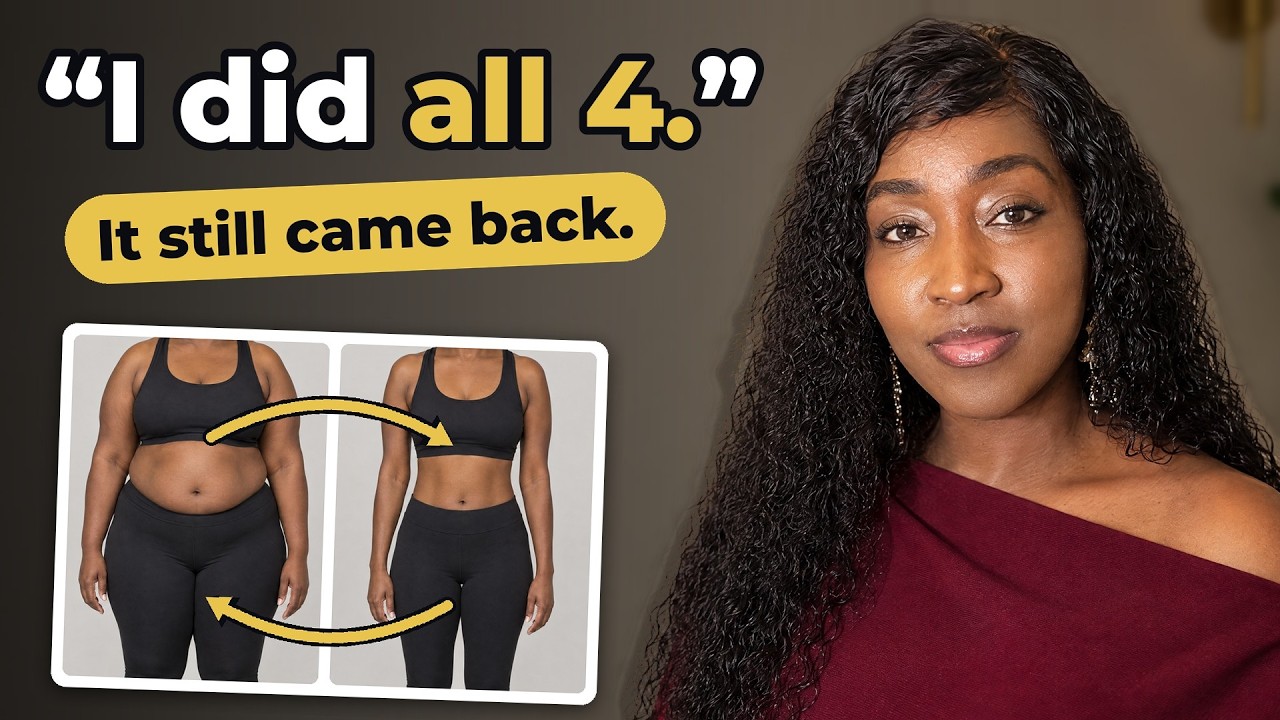
- I did all four: the deficit, the tracking, training on an empty stomach, and grading myself at the end of every day. The weight still came back, four times. The four tools were not the problem.
- The problem was the order I did them in, and the state my body was in when I started. I began with the most demanding tools, when my body was in no condition to use them.
- Not one of those collapses was a character problem. Every one of them was a timing problem. You did not fail four times. You started at Stage 3, four times.
I did all four and the weight still came back. The deficit. The tracking. Training on an empty stomach. And grading myself at the end of every day. Those four things are not myths. The problem was never which four I picked. It was the order I did them in, and the state my body was in when I started. This is the article I wish somebody had made for me, because I never needed anybody to tell me what to do. I needed somebody to tell me what order to do it in, and nobody ever did. It is the companion to my story of losing 40 kilos and gaining it back four times.
I want to be clear about what these four are. They are not four mistakes I made once. They are four collapses. Each one took months to build and one afternoon to end. So let me take them one at a time, and give you the research at full size, including the parts that do not suit my argument.
Mistake one: I restricted
Every rebuild I ever started, I started by cutting, hard. There is a trial I keep coming back to here. Tomiyama and colleagues, 121 women, four groups, three weeks. The group put on 1,200 calories a day came out with higher total cortisol output.
And I have to be fair about that, including on the side that suits my argument. A later meta-analysis of 13 studies and 357 people found this rise is driven mainly by fasting and by severe restriction. Milder diets did not reach significance. And a two-year trial called CALERIE found no sustained rise at all. So this is not all dieting raises cortisol. It is narrower than that. It is the severe end that does it. And the severe end is exactly where I always started.
Mistake two: I counted
Same trial, a different group. There was a group who only monitored what they ate, without being told to cut anything. Their perceived stress went up anyway. Both of those results come from one study, so I am not stacking two pieces of evidence in front of you. I am reading one carefully. But sit with it for a second. The counting itself carried a cost. And I counted for years, on top of restricting.
Mistake three: I trained on empty, and fasted too soon
I trained on an empty stomach, and I fasted long before my body could hold it. This is the one where being a nurse actively hurt me, because I could read the research, and I found it convincing. So let me give you that research at full size.
Training fasted does burn more fat during the session. About 3 grams more. That is roughly 27 calories. Over weeks, comparing fasted training with fed training, the effects on body mass and body fat are trivial to small. The authors of that review, five studies and 96 participants, say plainly that caution is warranted, because there is not enough data.
Time restricted eating, across 13 randomized trials and 612 women, produced 1.93 kilos of weight loss and lower fasting insulin. That is real. But there was no significant effect on visceral fat, on fat mass, or on glucose. And it was not better than simply eating less.
"These are good tools. I still use them. But I was asking a tool worth about 27 calories a session to hold up a system that was falling over. Nothing that size is strong enough for that job."
If you want the longer version of why these tools backfire on a stressed body, I wrote it here: why fasting can stall for stressed women over 40.
Mistake four: I graded my days
This is the one that actually ended every round. I graded my days. Every day got a mark. Did it, or did not do it. Pass or fail. And a scoring system like that has no move for a bad day. There is no partial credit anywhere in it. So on the day I could not do it, and there is always that day, there was nothing left for me to be except failed.
And once you are failed, tomorrow is not day 22. It is day zero. And day zero is heavy enough that most women do not start it. That is how a four month rebuild ends in a single afternoon.
"That was not weakness. That was a scoring system with no low setting, applied to a life that has low days in it."
What was different the time it held
I stopped choosing tools, and I started paying attention to order. I call it the Metabolic Recovery Framework, and it has three stages.
Stage 1. Remove. Before you add one single thing, take out whatever is creating the most disruption. For most women that is blood sugar chaos: the spike, the crash, the next spike, all day, every day. This is not a diet. You are not earning anything here. You are taking your foot off something. And this is the stage I skipped every time, because removing does not feel impressive.
Stage 2. Stabilize. Now you build the floor. Meals that actually happen, with protein in them. Water. Sleep, which is the most undervalued metabolic tool there is. The whole job of this stage is to send your body one message, over and over: we are not in an emergency. A body that believes it is in an emergency will not let go of anything. And it is right not to.
Stage 3. Expand. Only now do the demanding tools come in. Fasting. Harder training. All the things I used to begin with. They work here. They were never going to work at Stage 1, and that was never a question of my willpower.
So if fasting feels like a fight right now, ask yourself three things. Is your energy steady on the days you are not fasting? Is your sleep reasonably consistent? Are you eating regular meals with enough protein? If the answer is no, you are not failing Stage 3. You are being asked to do Stage 3 from Stage 1.
The one thing underneath all three stages
There is one thing that sits underneath all three stages, which I did not have for years. Your days are not all the same size. A full capacity day and a survival day should not be handed the same plan and then marked against each other. That is its own subject, and I have started on it here: how to plan for your worst week, not your best.
When it finally held, the weight was not the first thing to change. It was almost the last. What changed first was that my body felt calm. Then my head cleared. Then my sleep. Then, much later, the weight. And the weight stayed. That is the only part I care about now, because I have lost it four times, and losing the weight was never the hard part. It fits the same idea I keep coming back to: capacity before consistency.
"Not one of them was a character problem. Every single one of them was a timing problem. You did not fail four times. You started at Stage 3, four times."
So start at Stage 1. Remove one source of disruption. That is the whole assignment, and it is meant to feel too small. Health under real life pressure: slowly, honestly, and realistically.
Frequently asked questions
Why does the weight come back after you lose it?
For me it was never which tools I chose. It was the order I used them in, and the state my body was in when I started. I began every rebuild with the most demanding tools, when my body was in no condition to use them. You did not fail four times. You started at Stage 3 four times. Not one of those collapses was a character problem; every one of them was a timing problem.
Does cutting calories raise cortisol?
Not all dieting does. In one trial, the group placed on 1,200 calories a day came out with higher total cortisol. But a later meta-analysis of 13 studies and 357 people found the rise is driven mainly by fasting and by severe restriction; milder diets did not reach significance, and a two-year trial called CALERIE found no sustained rise at all. So it is the severe end that does it, and the severe end is exactly where I always started.
Does training fasted burn more fat?
During the session, yes, about 3 grams more, which is roughly 27 calories. But over weeks, comparing fasted with fed training, the effects on body mass and body fat are trivial to small, and the review authors say plainly that caution is warranted because there is not enough data. It is a good tool. It was just never strong enough to hold up a system that was falling over.
What is the Metabolic Recovery Framework and what order does it go in?
Three stages, in order. Remove: take out the biggest source of disruption first, usually blood sugar chaos. Stabilize: build the floor, with meals that actually happen, protein, water, and sleep, so your body stops believing it is in an emergency. Expand: only now bring in the demanding tools like fasting and harder training. If fasting feels like a fight right now, you are not failing Stage 3. You are being asked to do Stage 3 from Stage 1.
References
- Tomiyama AJ, et al. Low calorie dieting increases cortisol. Psychosomatic Medicine, 2010. 121 women, four conditions, three weeks; both the restriction and the monitoring findings come from this one trial.
- Meta-analysis of 13 studies, 357 participants: the cortisol rise is driven mainly by fasting and severe restriction; milder diets did not reach significance. The CALERIE two-year trial found no sustained rise.
- Vieira AF, et al. British Journal of Nutrition, 2016. PubMed 27609363. Fasted training and the small per-session fat difference.
- Hackett D, Hagstrom AD. Fasted versus fed training, 2017. Review of five studies, 96 participants; authors note caution is warranted given limited data.
- Chen S, Zhang X, Kortas J, Liu H. Time restricted eating in women. Frontiers in Nutrition, 2025;12:1664412. doi:10.3389/fnut.2025.1664412. 13 randomized trials, 612 women.
- This article is education, not medical advice, and not a diagnosis of your own situation. Never stop or change a prescribed medication without your doctor.
The Metabolic Recovery Framework: free
The free guide is this framework in order, the version I use now: Remove, Stabilize, Expand. Built for a loaded life, so you start at Stage 1 instead of Stage 3.
Related
I Lost 40 kg and Gained It Back 4 Times. Here Is Why
The story underneath these four collapses: a damaged signaling system, not a discipline problem.
Pillar 1 · Health That Survives Real LifeHow to Plan for Your Worst Week, Not Your Best
The piece underneath all three stages: your days are not the same size, so your plan cannot be either.